Your Cart is Empty
Iridology Chart Meaning: Unlocking the Secrets of Your Eye’s Map

What is an Iridology Chart?
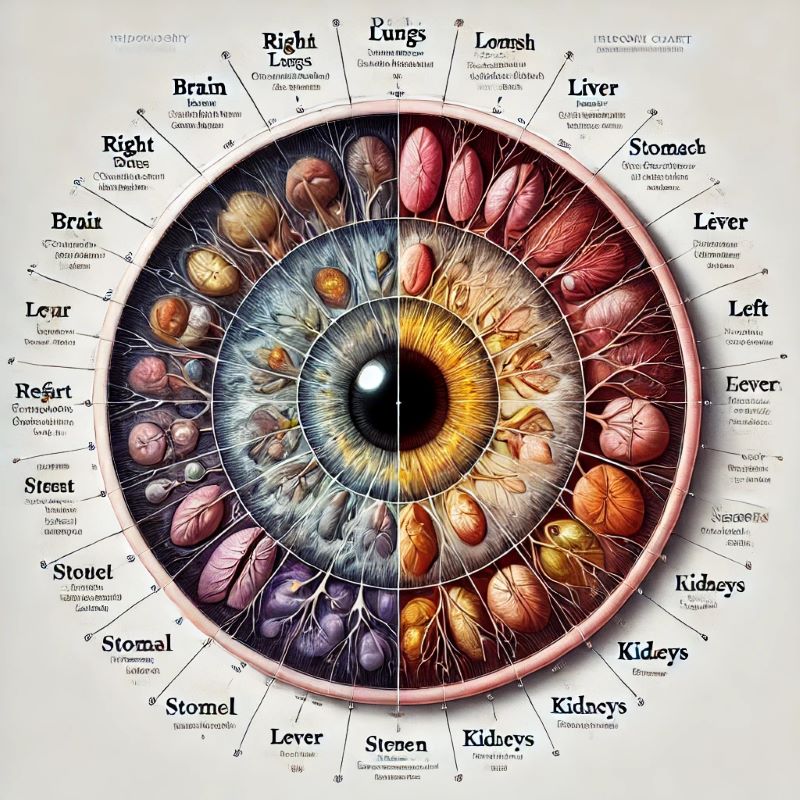
Iridology is the study of the iris—the colored part of your eye—to assess potential health conditions. Practitioners believe that different zones of the iris correspond to various organs and systems in the body. Aniridology chart serves as a map that helps interpret these connections.
Understanding the Iridology Chart
Theiridology chart divides the iris into multiple sections, each linked to specific body parts. Below is a general breakdown of how different areas of the iris are associated with various organs:
Right Iris (Linked to the Right Side of the Body)
-
Top Region – Brain, head, and sinuses
-
Upper Quadrants – Lungs and heart
-
Middle Area – Liver, gallbladder, pancreas
-
Lower Region – Kidneys, intestines, reproductive organs
Left Iris (Linked to the Left Side of the Body)
-
Top Region – Cerebral circulation, mental function
-
Upper Quadrants – Spleen, stomach, lymphatic system
-
Middle Area – Small intestine, colon, spine
-
Lower Region – Bladder, reproductive system
The Meaning of Iris Colors and Markings
Iridologists analyze not just the iris’s regions but also its color, texture, and markings. Some common interpretations include:
-
White Streaks – Inflammation or overactivity in the related organ
-
Dark Spots – Possible toxic accumulation or damage
-
Blue or Gray Iris – Often associated with a weaker immune system
-
Brown or Dark Iris – May indicate liver or digestive system tendencies
Does Iridology Work? The Science vs. Beliefs
While some alternative medicine practitioners swear by iridology, mainstream medicine remains skeptical. No clinical evidence supports iridology as a diagnostic tool. However, many believe it can serve as a complementary practice for overall wellness awareness.
Final Thoughts
Iridology offers a unique perspective on health by analyzing the patterns and structures of the iris. Whether you’re a believer or a skeptic, understanding theiridology chart meaning can be an insightful journey into holistic health.
Leave a comment
Comments will be approved before showing up.
Also in Iris Art Blog


Iris Photography Online: Guide to Creating Digital Eye Art from Home
Iris photography online allows you to turn a simple eye photo into detailed, artistic iris artwork without visiting a studio. The process is done remotely by uploading a close-up image of your eye through an online service, where professionals enhance, edit, and transform it into high-quality digital art.


How to Take Iris Photos: Guide to Capturing Stunning Eye Macro Photography
How to take iris photos involves capturing the intricate details of the human eye using macro photography techniques, proper lighting, and precise focus. The process starts with selecting the right camera or smartphone, using a macro lens for close-up detail, and setting up soft, controlled lighting to avoid reflections.


Iris Eye Art Photography: Capturing the Soul of Your Unique Eye
Iris eye art photography captures the intricate details, colors, and patterns of the human iris and transforms them into visually striking works of art. Using macro photography and creative editing techniques, each eye is revealed as a unique natural masterpiece with textures and designs that cannot be replicated.
Turning Your Iris Into Art - The Iris Blink Process
At Iris Blink, we've made it easy to transform your iris photo into a stunning personalized artwork. Our simple 4-step process ensures you receive a made-to-order masterpiece crafted to your exact vision.

STEP 1: Capture Your Iris
- Turn on your phone's flashlight and place it by the side of your eye to illuminate the iris.
- With your other hand, take a close-up photo of your eye using the camera on your phone.
- Ensure the iris is in focus and clearly visible. Natural, indirect light also works great!
STEP 2: Upload Your Photo
- Navigate to our product page and click on the "Upload Your Iris Photo" button.
- Follow the prompts to securely upload your iris images.
STEP 3: Art Proof Delivery
- Within 24 hours, our artists will handcraft an initial digital proof of your custom iris artwork.
- You'll receive the proof via email to review and provide feedback.
STEP 4: Revisions & Final Approval
- Iris Blink offers unlimited free revisions on every order so you're 100% satisfied.
- Request changes to the same artwork. until the artwork perfectly captures your unique iris.
- Once you approve the final proof, your masterpiece will be expertly printed and shipped.
That's it - a simple yet meticulous process to turn your personal iris photo into a vibrant canvas print, custom wall art piece, or signature bespoke iris portrait.
Premium Materials & Craftsmanship
- Museum-quality canvas, archival inks, professional frames for wall-worthy iris art decor.
- Abstract, realism, impressionism - our artists can adapt to your preferred styles.
Seamless Support
- Have any questions along the way? Our friendly support team is here to assist via email or chat.
Start your custom iris art journey with Iris Blink today!
About Iris Blink, Our Iris Art Story
Capturing the Essence of the Eye Through Art
 Iris Blink was born from a profound fascination with the intricate beauty and uniqueness of the human iris. Our company set out to transform ordinary iris photos into extraordinary custom artworks.
We were captivated by how each iris is truly one-of-a-kind, with its own distinctive patterns, colors, and depth - akin to a fingerprint of the soul. This inspired us to start handcrafting bespoke iris art from personal iris photography.
Through vibrant canvas prints, statement wall art pieces, and signature bespoke portraits, Iris Blink captures the mesmerizing details and spirit of each customer's iris. Our meticulous creative process, with unlimited free revisions, ensures every personalized iris artwork resonates deeply and becomes a cherished masterpiece.The Iris Blink Story: Capturing the Soul's Fingerprint Through Custom Iris Art
Today, Iris Blink remains driven by the mission to craft premium custom iris artworks while providing an unparalleled tailored experience to every customer. We're committed to strengthening the connection between individuals and their authentic selves through the power of iris photography and art.
In 2023, Portrait My Pet, the pioneering brand dedicated to handcrafting exquisite custom pet portraits, expanded its artistic horizons by acquiring Iris Blink. This sister company, born from a profound fascination with the intricacy and uniqueness of the human iris, specializes in transforming personal iris photography into extraordinary custom artworks.